Auto CPAP Isn’t Always Better: The SleepHQ Data You Need to See
Auto CPAP vs Fixed Pressure: The Big CPAP Myth Nobody Talks About
Think auto CPAP always gives you lower pressure and better results? Think again.
Automatic CPAP has always been sold as the clever option. The machine adjusts pressure throughout the night, only giving you what you need, when you need it.
Sounds perfect, right? Well after 20 years reviewing CPAP reports I’m not convinced.
In fact, I think a lot of people using auto CPAP could actually get better results, with far more stable breathing, by switching into fixed pressure CPAP mode.
Yes, old mate Nicko may be a few sandwiches short of a picnic, but hear me out.
The problem with auto CPAP
Here’s the theory.
When you’re using auto CPAP, your pressure often starts low. If your breathing is nice and stable, the machine may continue dropping the pressure down.
But then your airway starts to misbehave.
You get some flow limitation, a hypopnoea, an obstructive event, or a bunch of breathing instability. Only then does the machine start chasing the problem by increasing the pressure.
The issue is that once your breathing has started cycling and becoming unstable, it may take much more pressure to get things back under control than it would have taken to prevent the instability in the first place.
Think of your sleep apnea like a bloody great big boulder sitting at the top of a hill.
With fixed pressure CPAP, you’re gently leaning against the boulder all night, stopping it from rolling.
With auto CPAP, you step away from the boulder. It starts rolling down the hill, gathers momentum, and then your machine has to sprint after it and try to stop it.
That is the big question: is auto CPAP preventing events, or is it simply chasing them after your breathing has already fallen apart? And the even bigger question is it actually chasing the breathing disturbance or is just chasing shadows in the night? If you want to test this theory just lie in bed for 30 minutes awake and you’ll likely see the pressure levels changing! (We all know there’s no apnea when you’re awake!)
Same pressure. Very different results.
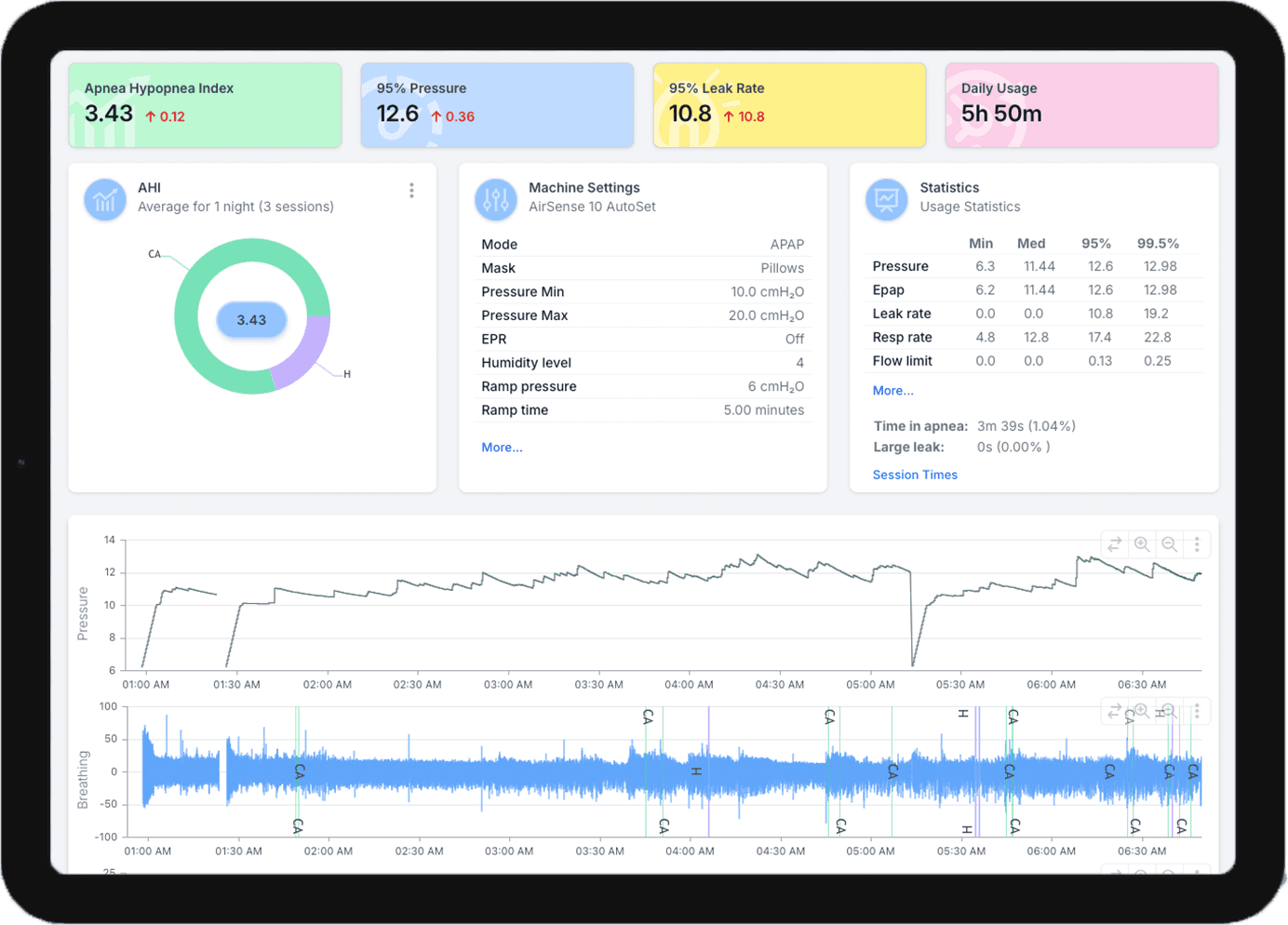
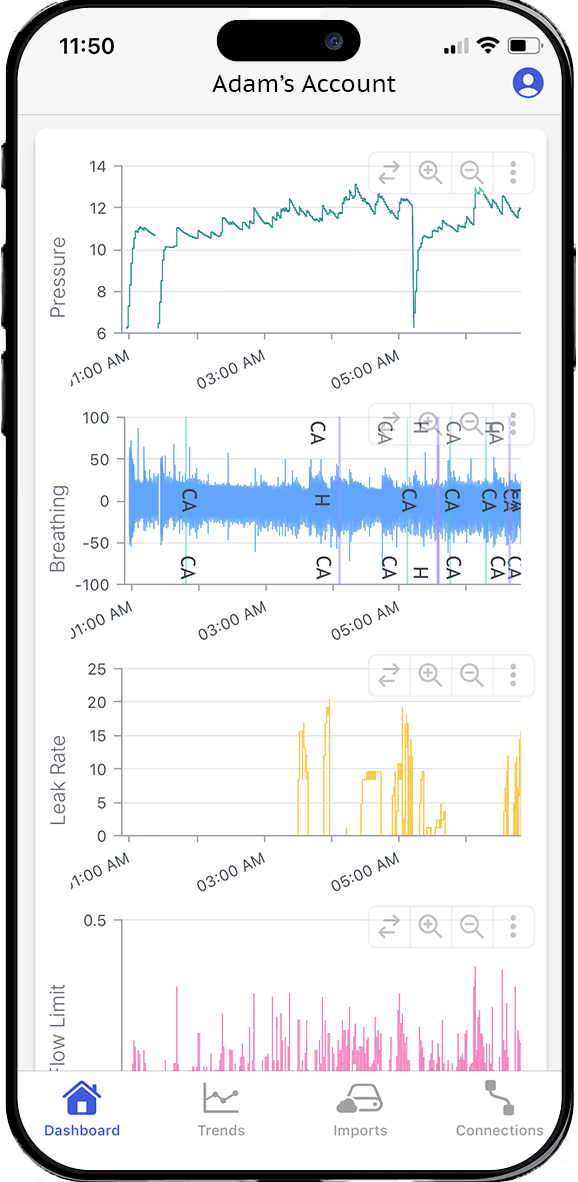
I recently looked at a SleepHQ patient who had been using auto CPAP mode. Their pressure was bouncing around throughout the night, climbing all the way up to the maximum pressure of 17 cmH2O.
Their breathing was unstable, with plenty of respiratory effort-related arousals, or RERAs, scattered through the night.
Their AHI on one example night was 16.5.
Then they changed to fixed pressure CPAP mode at 14 cmH2O.
Same patient. Same therapy. Much more stable pressure.
The result?
Their AHI dropped to 3.1 on the example night, with far smoother breathing and far fewer disturbances.
But here’s the really interesting part.
When we compared longer time periods using a SleepHQ Detailed Comparison Report, their average pressure in auto mode was 14.38 cmH2O.
In fixed pressure mode, it was 14.39 cmH2O.
Basically identical pressure.
Yet their average AHI dropped from 18.36 to 5.46, their total obstructive apnea count dropped from 570 to 68, and their flow limitation markers improved dramatically.
Same average pressure. Completely different outcome.
That is why I think the idea that auto CPAP automatically means lower pressure and better comfort deserves a serious rethink.
Your AHI might not be telling the full story
Here’s another trap people fall into.
They look at their AHI, see a nice low number, and assume everything is brilliant.
Unfortunately, AHI does not always capture every breathing disturbance affecting your sleep.
RERAs and flow limitations can still fragment your sleep, even when your AHI looks okay on paper. You might be told your numbers look great, but you’re still waking up foggy, tired and wondering why you feel like you’ve been hit by a bus.
This is why looking at your actual breathing charts matters.
On SleepHQ, you can see the pressure changes, the unstable breathing, the respiratory disturbance flags, the leak, the flow limitation and even how these disturbances may line up with disrupted sleep.
Your summary number is useful. Your full data tells the real story.
Should you try fixed pressure CPAP mode?
Not everyone will do better on fixed pressure. Sleep apnea therapy is never one size fits all.
But just because you bought an automatic CPAP machine does not mean you have to stay in automatic mode forever.
A simple experiment may be worth discussing with your clinician:
Run your therapy in auto mode for a period of time, then compare it against a fixed pressure setting based around your average treatment pressure.
With SleepHQ, you can generate a detailed comparison report and see the difference for yourself:
-
AHI
-
Obstructive apneas
-
Flow limitation
-
Leak
-
Pressure
-
Therapy stability
-
Sleep disturbance patterns
No guessing. No relying on a green smiley face. Just your own real-world therapy data.
The bottom line
Auto CPAP sounds clever because it constantly adjusts throughout the night.
But sometimes the cleverest approach is also the simplest: hold the airway steady, stop the boulder from rolling, and prevent the instability before it starts.
I strongly suspect that a lot of CPAP users are sitting in auto mode with pressure bouncing all over the shop, when fixed pressure could potentially give them smoother breathing, fewer disturbances and better sleep.
And one day, I reckon we’ll prove it across thousands of SleepHQ members.
Until then, compare your own data.
Sleep well, look after your mates, and don’t let a fancy automatic setting stop you from trying something that might work better.

Nick Dunn
SleepHQ Founder